
- Case -
Bio Aus Dänemark and Danish Agriculture & Food Council
Anuga 2025 in Cologne
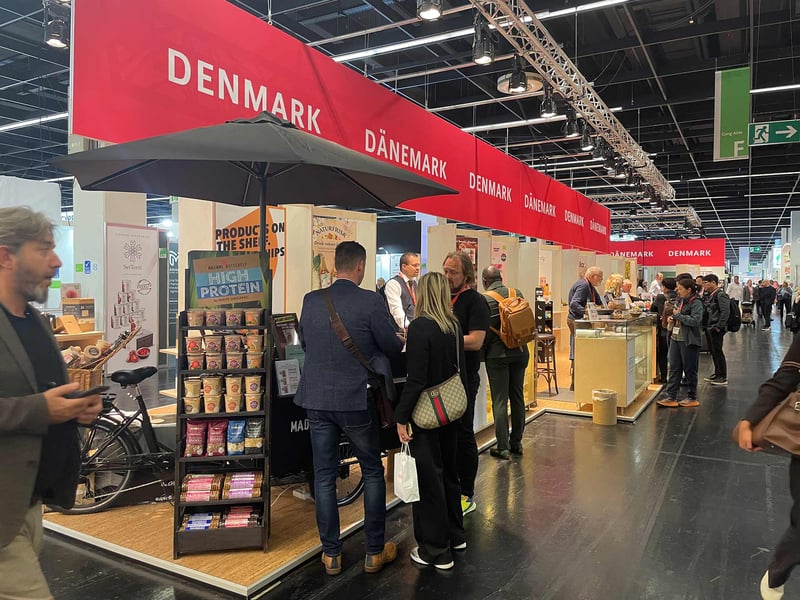
Danish joint pavilion at Anuga 2025
Anuga in Cologne is one of the world’s largest food trade fairs, bringing together decision-makers, buyers, and producers from across the globe every two years. I 2025, Danish Agriculture & Food Council and Bio Aus Dänemark joined forces to create a Danish joint pavilion with a clear objective: to give Danish organic producers a strong international platform while strengthening the story of Denmark as a food nation.
A total of 25 Danish companies were to be presented together — yet still have space for their individual identity, products, and dialogue.
The pavilion had to communicate Danish values — quality, innovation, and organic production — to an international audience.
One pavilion. 25 companies. One strong story.
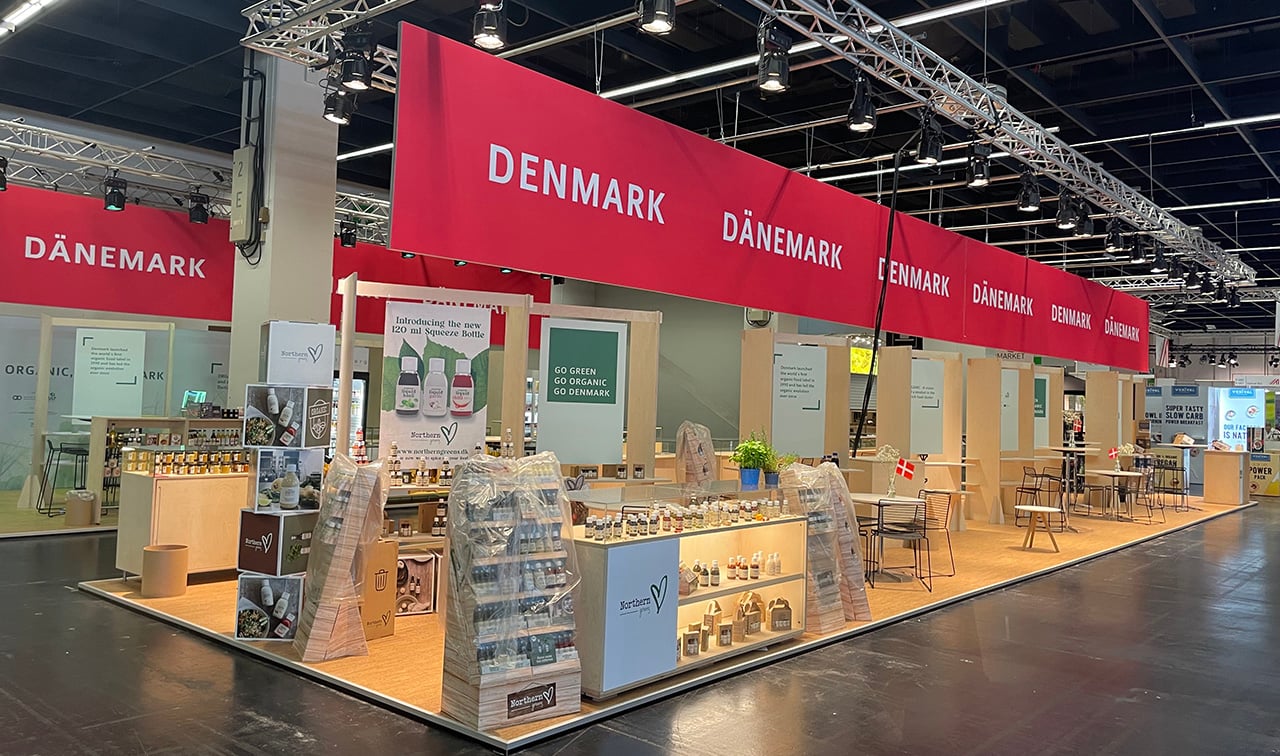
Scanex developed a cohesive solution where architecture, graphics, and visitor flow worked together to create both community and individuality.
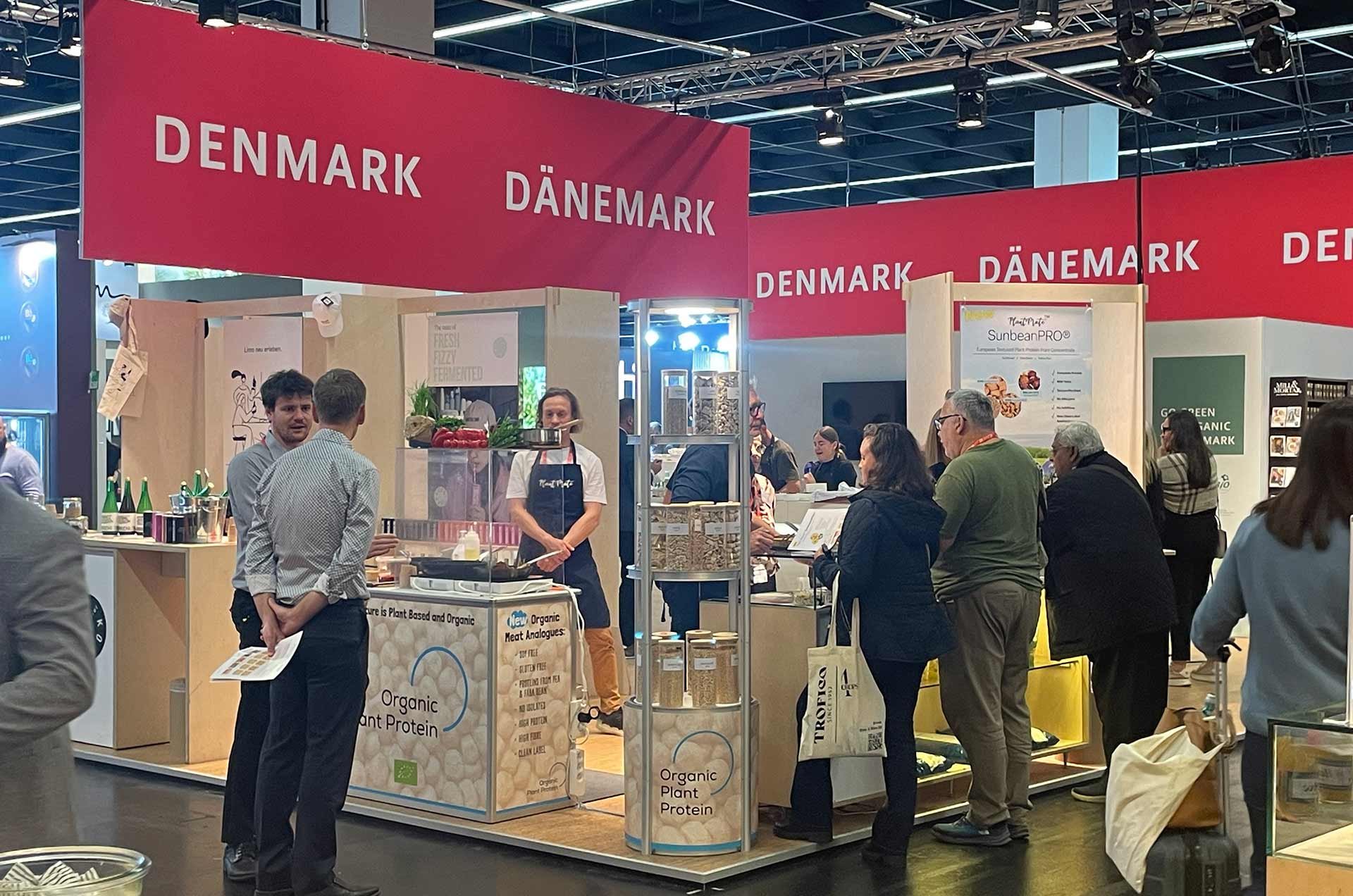
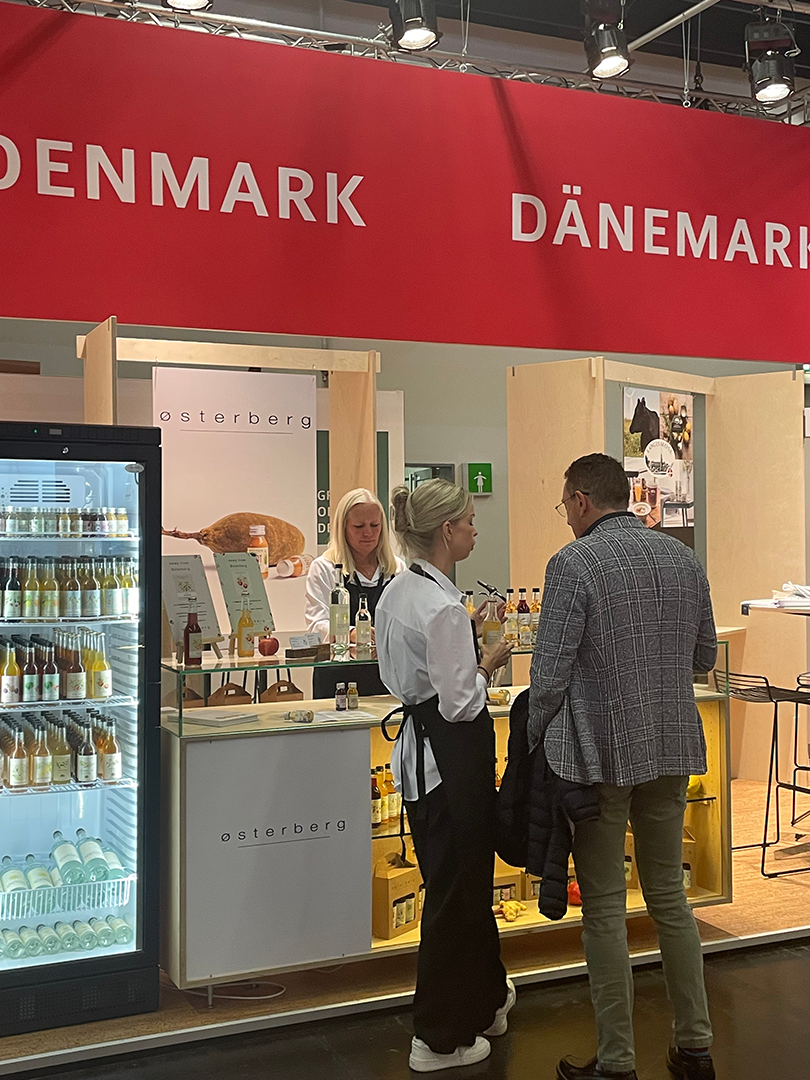
The pavilion was designed as a clear Danish entity at the fair with strong recognizability and open entrances inviting visitors inside. At the same time, the area was divided into manageable zones so each company had a natural framework for presenting its products.
Visually, the solution was based on Nordic simplicity and clean materials combined with clear communication of organic production and innovation.
A natural gathering point became a large counter/kitchen area, where exhibitors were treated daily to fresh, delicious meals. The aroma of food spread throughout the area and created a lively atmosphere. The area functioned both as a break zone and an informal meeting place, strengthening the community among companies during the exhibition.
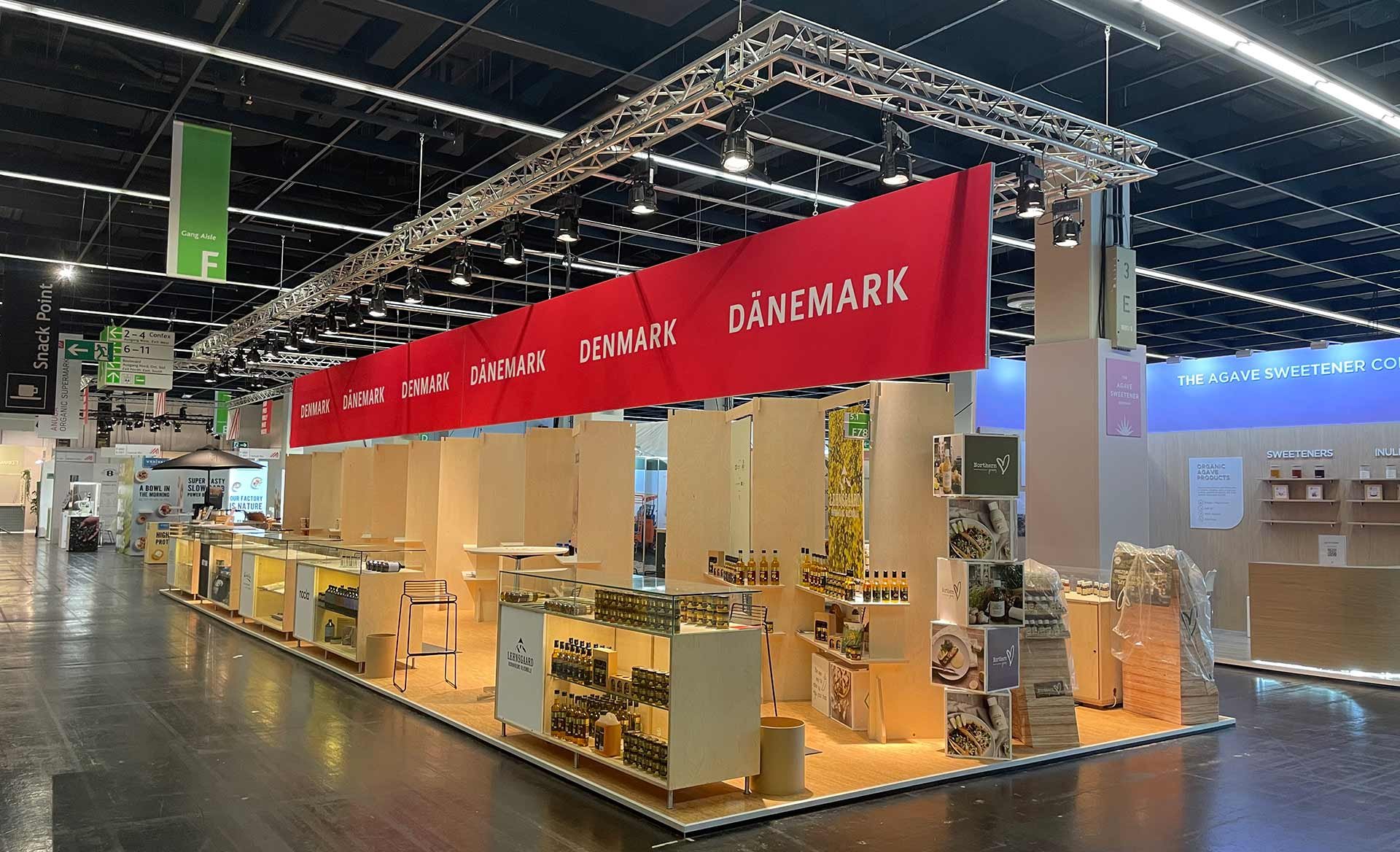
A strong collaboration
The project was carried out through close and constructive cooperation between Scanex, Bio Aus Dänemark, and the Danish Agriculture & Food Council — a collaboration based on good dialogue, trust, and a shared focus on creating the best possible setting for all exhibitors.
FAQ – Frequently Asked Questions
-
What was the purpose of the Danish joint pavilion?
The purpose was to give Danish organic producers a strong international platform at Anuga while strengthening the narrative of Denmark as a credible and innovative food nation.
-
What was the biggest challenge — and how was it solved?
The challenge was gathering 25 companies in one pavilion without creating visual noise or internal competition.
Scanex solved it by working with a shared framework – individual stage: a strong overall architecture with clear zones where each exhibitor had its own natural presentation area.
All of this was planned and coordinated in close collaboration with Bio Aus Dänemark and the Danish Agriculture & Food Council, who handled communication with exhibitors. -
How did Scanex ensure balance between community and individuality?
By standardising the framework and individualising the content. All companies received the same quality and visibility but could customise their presentation within the overall design concept.
-
What value did the solution create for the exhibitors?
The exhibitors gained:
- greater visibility through shared branding
- a professional international appearance
- improved visitor flow and more dialogue
- stronger community during the fair
In short: they stood stronger together than they would individually.
-
What does the case show about Scanex’s approach to exhibition design?
That a trade fair stand is not only a physical construction — but a strategic communication platform.
Scanex works holistically, where architecture, graphics, behavior, and relationships must function together to create measurable impact.
We can also help you!
Looking for inspiration for your next exhibition stand?
Fill out the form and we will contact you.